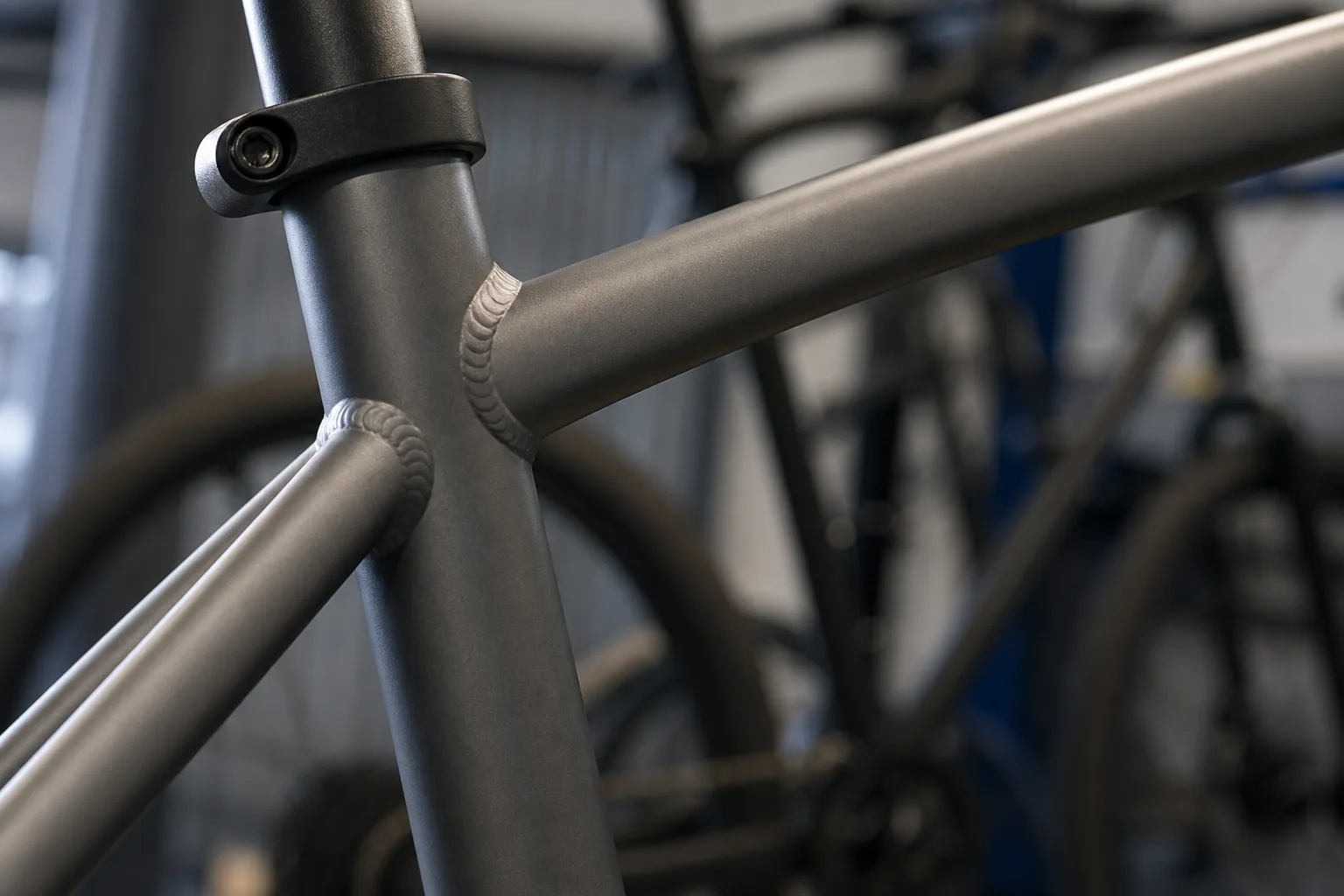
A working comparison of open, mixte and low diamond hybrid frames on flex under load, rack and child-seat fitment, weight and resale, and when stiffness is genuinely noticed.
The argument against a step-through usually arrives as a feeling rather than a measurement: someone says the frame is flexy, or whippy, or that it will not hold up under a loaded rack, and the conversation moves on before anyone asks under what conditions that would actually be true. It is worth slowing down there, because the answer depends on how the bike is built, not on whether a top tube runs from the head tube to the seat tube. Modern open frames are not the thin-tubed roadsters that gave the shape its reputation. The trade-offs are real, but they are narrower and more specific than the folklore suggests.
Where the flex actually lives, and when a rider notices it
A diamond frame is a triangulated structure, and triangulation is what resists twist. Remove the top tube and the head tube can rotate slightly relative to the bottom bracket under hard input, which is felt as vagueness in the steering rather than as softness under the saddle. The riding that surfaces this is narrow: standing and throwing the bike side to side on a steep climb, sprinting from a stop with real force, or descending fast on a bike carrying weight high and behind. Seated pedaling at commuting effort will not reveal it on any competently built aluminum open frame. Manufacturers compensate with a large-diameter, heavily butted down tube and a bracing curve or a doubled tube where the top tube used to be, which is why two open frames can feel completely different.
The mixte and the low diamond as engineered middles
A mixte replaces the single top tube with twin small-diameter stays running from the head tube past the seat tube to the rear dropouts, which restores much of the triangulation while keeping the standover low. It is an elegant answer, though genuine mixtes are now uncommon on mainstream hybrids and are more often found in steel, from smaller builders, at higher prices. The low diamond, sometimes sold as a mid-step or trapeze, keeps a full top tube but slopes it steeply toward the seat tube, cutting standover by several inches while preserving the closed front triangle. For a shorter rider who wants stiffness without a bar in the way during a hurried dismount, the low diamond is usually the most available compromise, and it is the shape most likely to exist in a genuinely small size.
Racks, child seats and the mounts nobody checks in the showroom
Rack and child-seat compatibility has almost nothing to do with the top tube and almost everything to do with the rear triangle, the seat stay eyelets, and the manufacturer's stated maximum load for both the rack and the frame. A frame-mounted child seat bolts to the seat tube and the stays, so an open frame handles it as well as a diamond does, provided the seat tube has clearance below the collar and the stays carry threaded bosses rather than clamp-on adapters. The Consumer Product Safety Commission is responsible for the federal safety requirements that bicycles sold in the United States are built to, and the load ratings a manufacturer publishes should be treated as the operative number. What changes with a step-through is the handling of a loaded bike at walking pace, where the lower standover makes a foot-down save much easier.
Weight, price and what the used market pays
Expect an open frame to weigh modestly more than the diamond version of the same model, because the tubes are made larger and thicker to recover stiffness; the difference tends to be small enough that a heavier tire or a steel rack will swamp it. Resale is the quieter difference. Step-through hybrids sell readily to the buyers who want them, often faster and locally, while diamond frames draw a wider pool of shoppers. Neither shape holds value the way a well-known component group and honest maintenance records do.
What a careful reader checks before buying
Stand over the bike in the shoes worn for riding, then check the down tube diameter, the presence of a bracing gusset at the head tube, whether the seat stay eyelets are welded on or aftermarket, and the published weight limit including cargo and rider. Ride it loaded if the shop allows. Press hard out of a driveway and watch the front wheel for a moment of delay.
The shape to buy is the one that lets a rider get on and off without ceremony, carries what needs carrying, and stops the argument about stiffness at the point where it stops mattering.